Methodology

Our Approach

We look at daily life as a system. Physical wellbeing isn't separate from how you organize your time — it's a direct product of it.

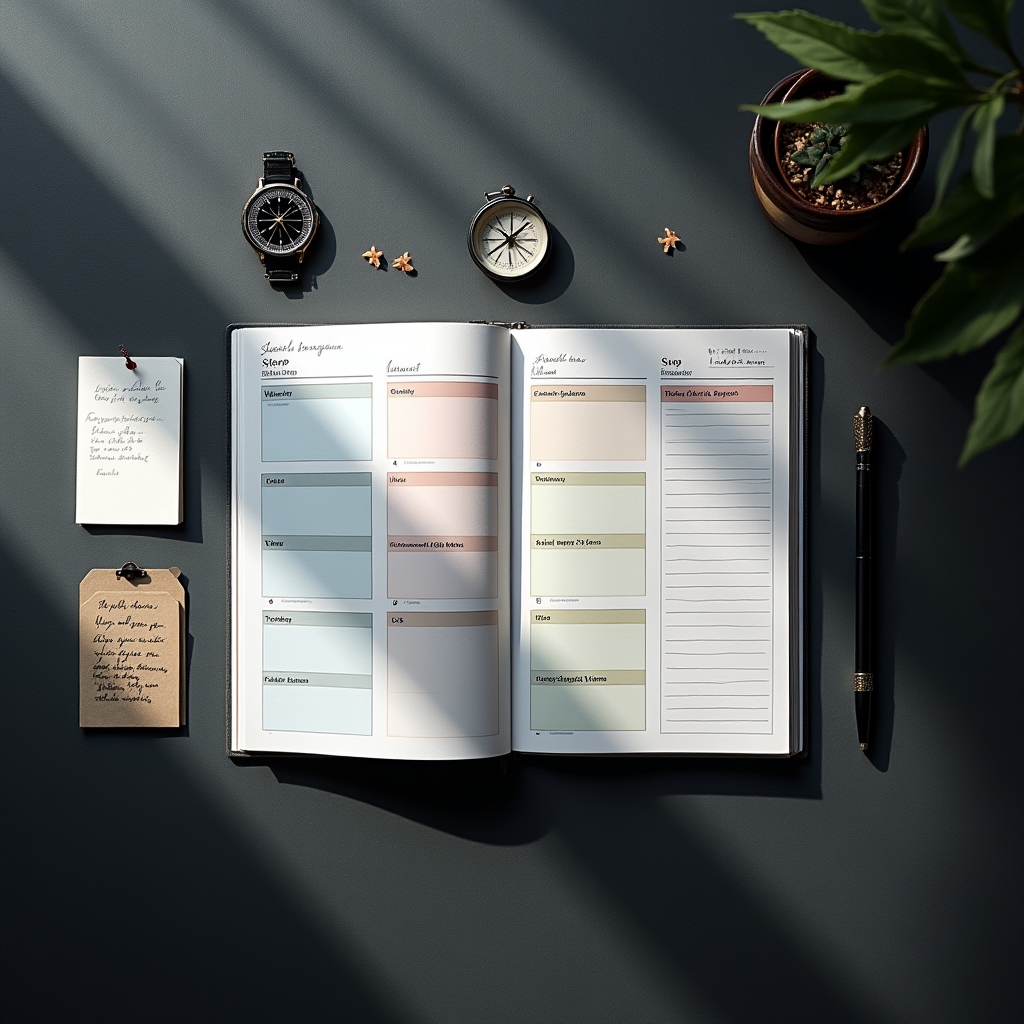
Structured daily planner open on a desk showing organized time blocks for work, rest and movement

The system view of physical wellbeing

Most approaches to physical health focus on what you do during exercise. We focus on the other 23 hours. The way you structure your day — when you wake, how you transition between tasks, what fills your evenings — creates the conditions that either support or undermine your capacity for movement and recovery.

We treat daily structure as a design problem. Like any design problem, it can be analyzed, adjusted, and improved without starting from scratch. Small, targeted changes to how time is organized tend to produce more lasting results than large interventions that don't fit into real life.

Structure before motivation
System-level thinking over isolated habits
Feasibility as a core design constraint
Flexibility built into every framework

The Framework

How we analyze daily structure

A

Time Audit

We begin with an honest accounting of how time is currently spent. Not the ideal schedule — the actual one. This reveals patterns that aren't visible when you're inside them.

B

Friction Mapping

Every schedule has friction points where physical activity gets displaced. We map these systematically — not to assign blame, but to understand the structural causes.

C

Opportunity Identification

Within any schedule, there are underutilized windows and transition moments that can be redesigned. We identify these opportunities and assess which adjustments are realistic.

D

Adaptive Design

We build schedules and frameworks that are designed to flex when circumstances change. The goal is a structure that holds its shape without becoming rigid.

Four Domains

The areas we work across

Physical wellbeing doesn't live in one part of the day. Our training addresses how it threads through all four major domains of daily life.

Work

Work schedules are often the least flexible part of a day, but they contain more adjustment potential than most people realize. Desk posture, break timing, transition rituals, and end-of-day routines all interact with physical capacity.

Sleep

Sleep is where physical recovery actually happens. We look at sleep timing, pre-sleep routines, and how sleep quality feeds back into energy levels and willingness to move the following day.

Social

Social routines shape time availability in ways that are often invisible. We look at how social commitments can be structured to coexist with or actively support physical activity rather than compete with it.

Leisure

Leisure time is often the most flexible and most squandered. We examine how leisure choices affect both physical activity levels and recovery quality, and how to make more intentional use of this time.

Format

Fully online. Structured for real life.

All Geyexo training is delivered online, in a format designed to fit into the kind of schedule we're actually discussing. Short focused modules, clear frameworks, and material you can apply immediately to your own situation.

We don't require you to clear a week from your calendar. The training works with the time you have, not the time you wish you had.

Video modules Self-paced, structured content you can revisit
Worksheets and frameworks Practical tools for analyzing your own schedule
Iterative structure Each module builds on the previous one
Online training module displayed on a laptop screen with structured course content and progress indicators